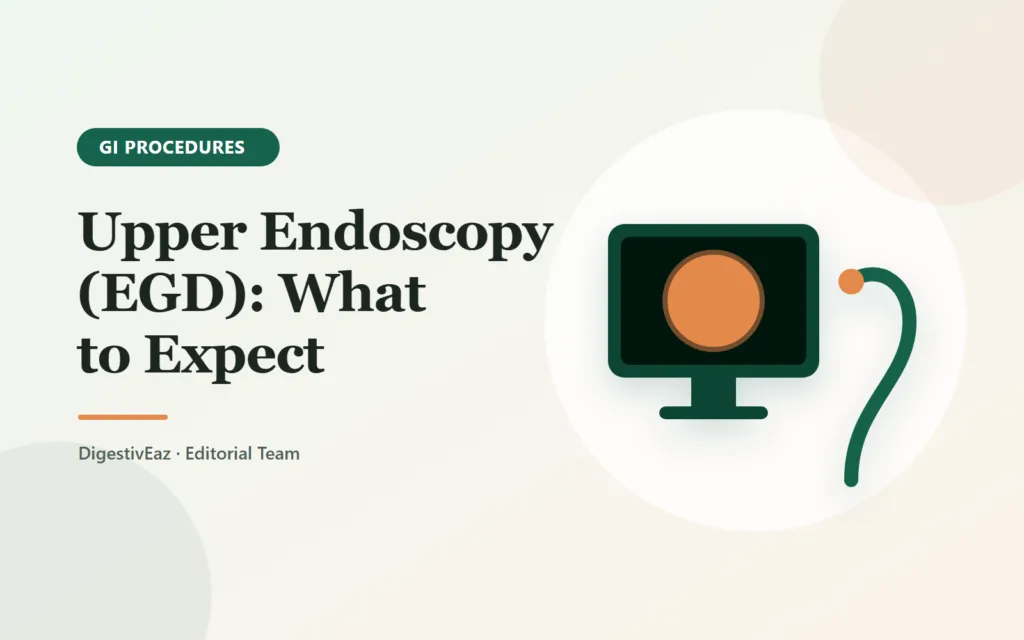
An upper endoscopy, or EGD, is a short outpatient procedure in which a thin camera examines the esophagus, stomach and the first part of the small intestine, usually under sedation. It helps explain reflux, swallowing problems, ulcers and bleeding, and small tissue samples can be taken at the same time. Upper endoscopy is one of three procedures offered at the endoscopy center featured on DigestiveAZ.com; here is what to expect.
Key takeaways
- EGD stands for esophagogastroduodenoscopy and looks at the upper digestive tract.
- Most people fast for several hours beforehand; follow your own instructions.
- Sedation is common, so you will need someone to drive you home.
- Biopsy results usually follow a few days after the procedure.
Why an upper endoscopy is done
Gastroenterologists recommend an EGD to look directly at the lining of the upper digestive tract. Common reasons include:
- Frequent heartburn or reflux that does not respond to treatment.
- Difficulty or pain when swallowing.
- Upper abdominal pain, nausea or vomiting that keeps returning.
- Signs of bleeding or unexplained anemia.
- Checking for ulcers, inflammation, celiac disease or abnormal tissue.
The NIDDK guide to upper GI endoscopy lists these and other reasons in detail. If reflux is your main concern, our article on when heartburn needs a GI doctor is a useful companion read.
How to prepare
Preparation for an EGD is simpler than for a colonoscopy, but it still matters. Your care team will give you written instructions, which always come first.
| When | What usually happens |
|---|---|
| About a week before | Review medications, especially blood thinners and diabetes medicines, and arrange a driver. |
| The night before | Eat a normal evening meal unless told otherwise. |
| Several hours before | Stop eating and drinking for the period in your instructions so the stomach is empty. |
| Procedure day | Bring ID, insurance card and medication list; wear comfortable clothes. |
What happens during the procedure
Upper endoscopies for Digestive Health Specialists take place at the endoscopy center in Suite 117 of Princess Medical Center, open weekdays from 7:00 AM to 5:00 PM. Address and suite details are in our DigestiveAZ.com practice guide.
- A nurse reviews your health history and places an IV for sedation.
- You lie on your side, and a small mouth guard protects your teeth.
- The physician gently passes a thin, flexible endoscope through the mouth.
- Air may be used to open the area for a clear view; biopsies are painless.
- The exam itself often takes around 15 to 30 minutes.
Recovery and results
You will rest in recovery while the sedation wears off. A mild sore throat or bloating is common and usually settles within a day. Because sedation affects judgment and reaction time, an adult must drive you home, and you should avoid driving, working with machinery or signing important documents for the rest of the day.
The physician usually shares initial findings before you leave. If biopsies were taken, results typically follow within days by call, appointment or the patient portal. Seek urgent care for severe chest or abdominal pain, fever, trouble swallowing, vomiting blood or black stools after the procedure.
EGD vs colonoscopy
An EGD looks at the upper digestive tract through the mouth; a colonoscopy looks at the colon and rectum. Some patients need both, sometimes on the same day. Our colonoscopy prep guide explains the extra preparation a colonoscopy needs, and the article on colon cancer screening at 45 covers when screening starts.
Staying well hydrated in the days around any procedure helps recovery; see our guide to hydration in the Arizona heat. Browse every procedure article in GI procedures, or explore digestive conditions for the problems an EGD can help explain. Patients of the practice behind DigestiveAZ.com receive their own preparation instructions when the procedure is booked.
Questions to ask before your procedure
Knowing what to expect makes procedure day calmer. When the practice books your upper endoscopy, these questions are worth asking:
- Why is the procedure recommended, and what are you looking for?
- How long should I fast, and can I take my usual medicines with a sip of water?
- Do any of my medicines, such as blood thinners or diabetes medicines, need adjusting?
- What type of sedation will be used, and how long should I plan to stay?
- Will biopsies be taken, and how will I receive the results?
- Which symptoms afterwards should prompt a call or urgent care?
Write the answers on your instructions sheet so everything is in one place. If you are anxious about the procedure, say so; the care team can explain each step and what you will feel.
Planning the day
Arrange for an adult to drive you home and, ideally, stay with you for a few hours. Leave jewellery and valuables at home, wear loose clothing and bring your ID, insurance card and medication list. Most people return to normal activities the next day.
Frequently asked questions
Is an upper endoscopy painful?
Most people feel little or no discomfort because sedation is commonly used. Afterwards, a mild sore throat or a bloated feeling is common and usually passes within a day. Tell your care team if you have concerns about sedation so they can explain the options available to you.
How long does an EGD take?
The procedure itself often takes about 15 to 30 minutes, but plan for a longer visit to allow for check-in, sedation and recovery. Most patients go home the same day. Your instructions will list your arrival time and roughly how long to expect.
Can I eat after an upper endoscopy?
Many people can eat once the throat numbness and sedation have worn off, starting with light foods. If biopsies were taken or a treatment was performed, you may receive specific diet instructions. Follow the guidance your care team gives you before you leave.
When will I get my biopsy results?
Biopsy results usually take a few days because the tissue is examined in a laboratory. The practice will share them by phone, at a follow-up appointment or through the patient portal. Ask before you leave how and when you should expect to hear.
This article is general information, not medical advice. For personal care, contact your clinician or call (480) 563-5757.